
Quantum HR enhances HR efficiency through technology integration, managing transformation projects, and providing ongoing support
Quantum HR enhances HR efficiency through technology integration, managing transformation projects, and providing ongoing support
For years, conversations about AI at work have centred on automation and job displacement. Microsoft's latest Work Trend Index suggests a different reality is emerging. AI is enabling employees to spend less time on low-value operational work and more time applying their expertise.
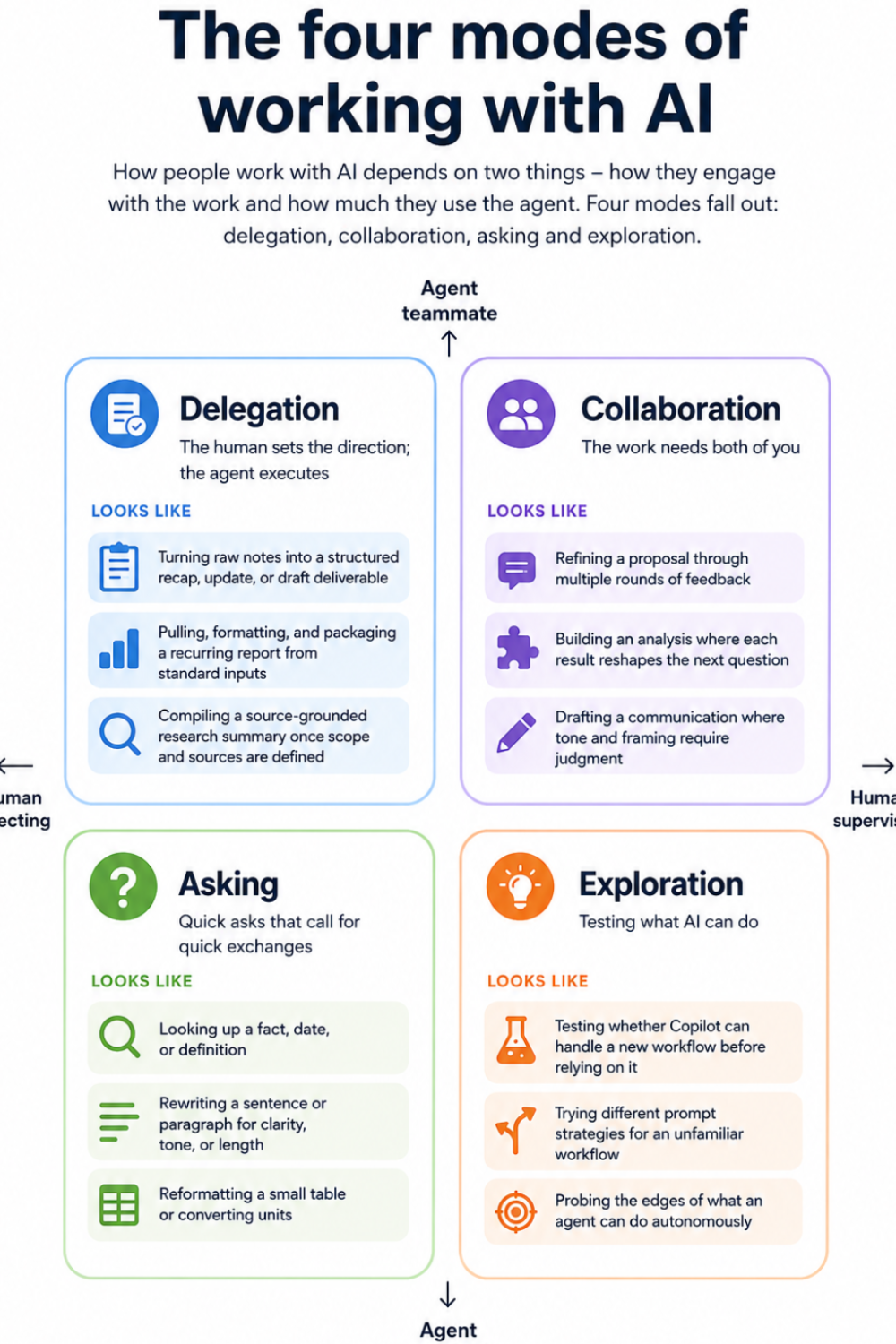
AI is becoming a thinking partner
According to Microsoft's research, almost half (49%) of interactions with Microsoft 365 Copilot are focused on cognitive work such as analysing information, solving problems, making decisions and thinking creatively. Only a smaller proportion is spent on finding information, producing documents or communicating with others.
This highlights a significant shift. AI is no longer just a productivity tool; it's increasingly acting as a partner that helps employees reason, analyse and explore ideas.
More time for high-value work
The benefits are already being felt in the workplace. Microsoft's survey found that:
Rather than simply helping people work faster, AI is expanding who can contribute to complex work and enabling employees to take on new challenges.
Human judgement matters more than ever
As AI becomes more capable, human skills are becoming more valuable. When asked which skills will be most important in an AI-powered workplace, employees identified:
Encouragingly, most workers aren't blindly trusting AI. In fact, 86% say they view AI output as a starting point rather than a final answer and remain responsible for the thinking behind their work.
The message is clear: AI may generate content, but people remain accountable for evaluating, refining and applying it.
The rise of the "Frontier Professional"
Microsoft identified a group of highly effective AI users known as Frontier Professionals. These employees don't simply use AI for quick tasks; they actively redesign workflows, use AI agents to complete complex activities and help establish AI best practices within their teams.
Interestingly, these advanced users are also more deliberate about maintaining their own skills:
The most successful AI users aren't outsourcing their thinking. They're becoming better at directing it.
A new definition of value at work
The report suggests that the future of work won't be defined by the tasks people complete, but by the outcomes they create.
As AI takes on more routine execution, employees will increasingly add value through:
In other words, the question is shifting from "What tasks do I perform?" to "What outcomes can I deliver?"
What this means for employers
Organisations that want to maximise the value of AI should focus on developing human capabilities alongside technical adoption. Training employees to think critically, evaluate AI outputs and redesign workflows may prove just as important as teaching them how to use AI tools.
The organisations that thrive won't be those with the most AI. They'll be the ones who help their people use it wisely.
Source: Microsoft (2026): Agents, human agency and the opportunity for every organisation
Unlock the full potential of your HR with our tailored solutions — explore our services or schedule a free call to get started.
Lorem ipsum dolor sit amet, consectetur adipiscing elit. Suspendisse varius enim in eros elementum tristique.
Quantum HR provides a range of services including Business Process Audits, Transformational Project Management, and Continuous Support & Development. These services help organisations streamline HR practices, implement new technologies, and maintain ongoing digital transformation.
Quantum HR assists organisations by analysing current HR processes, identifying gaps, and implementing technological solutions that automate tasks and improve efficiency. We manage the entire transformation process, ensuring seamless integration and positive user experiences.
Quantum HR primarily works with small to medium-sized organisations across various industries, including the private sector, charity, and publicly funded organisations. Our services are tailored to meet the unique needs of each client.
Quantum HR is unique in its combination of HR expertise and deep understanding of technology. Unlike traditional companies, we focus on digital transformation from an HR perspective, ensuring that technological solutions align perfectly with HR processes and goals.
After implementing new processes or technologies, Quantum HR offers continuous support to ensure these solutions are embedded as the new normal. This includes updates in response to legislative changes, software upgrades, and regular process reviews for continuous improvement.