
Quantum HR enhances HR efficiency through technology integration, managing transformation projects, and providing ongoing support
Quantum HR enhances HR efficiency through technology integration, managing transformation projects, and providing ongoing support
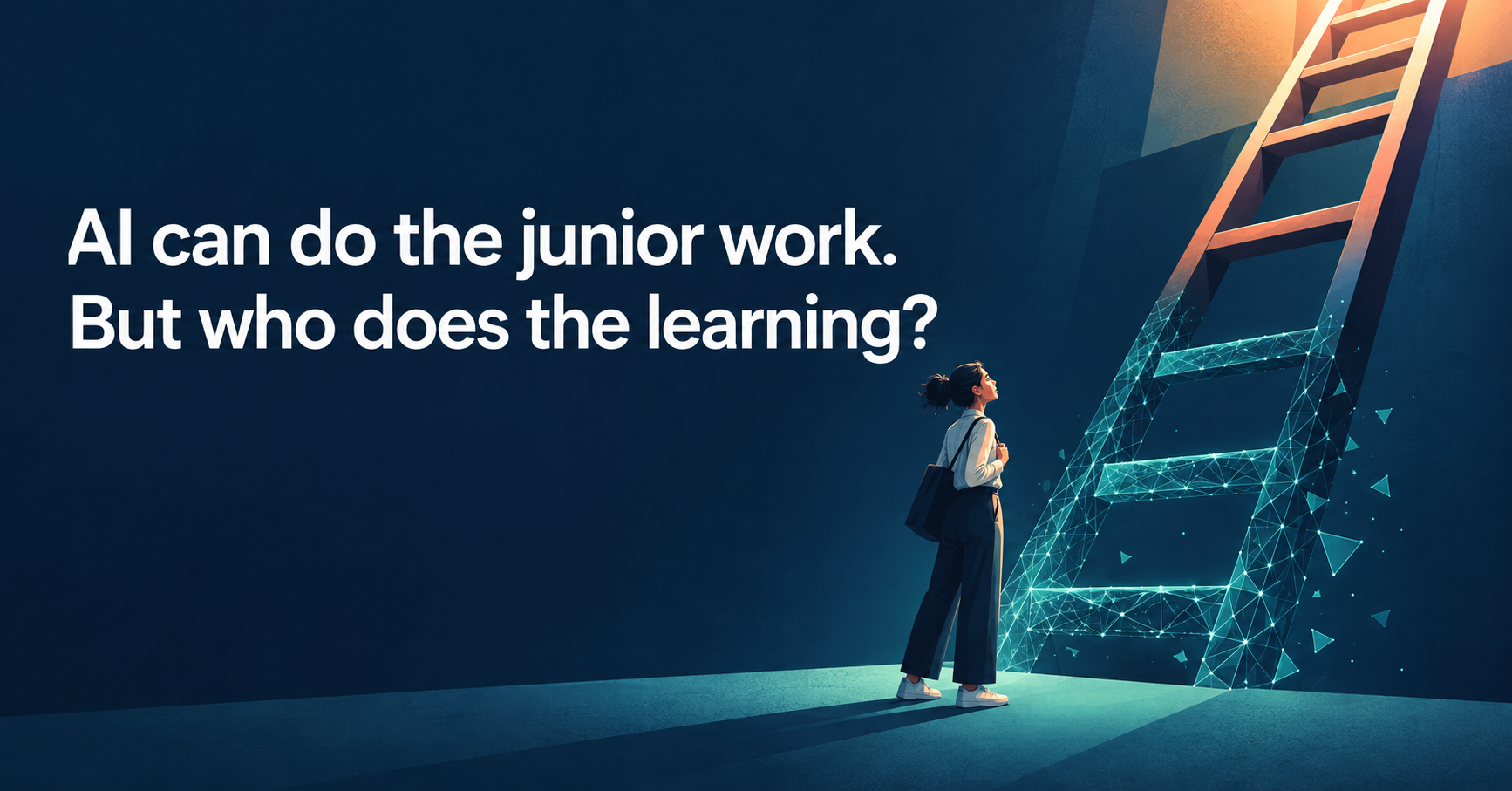
AI is creating new opportunities, increasing demand for new skills and changing how work gets done. But it may also be disrupting the way people gain the experience needed to progress.
For HR leaders, this is becoming a workforce planning issue rather than a simple debate about whether AI will create or destroy jobs.
Recent evidence from Ireland shows that demand for AI capability is growing quickly. The Expert Group on Future Skills Needs reports that Ireland is creating AI related jobs at around two to three times the pace of comparable EU countries. PwC also found that AI hiring in Ireland almost doubled between 2024 and 2025, while roles requiring specific AI skills have grown far faster than the wider jobs market since 2019.
This demand is not limited to people who build AI systems. Organisations increasingly need accountants, recruiters, HR professionals, marketers and analysts who can apply AI effectively within their own disciplines.
At the same time, entry level opportunities are under pressure. Work Foundation research found that 43% of UK employers surveyed said investment in AI or automation had reduced entry level roles. Among large employers, that figure rose to 60%.
The wider employment picture is much more complicated. UK Government and LinkedIn analysis found that junior hiring has weakened broadly alongside the overall labour market, which is also being affected by low growth, falling vacancies, higher employment costs and cautious recruitment. AI cannot be blamed for the entire decline.
However, the pattern within occupations deserves attention. Junior roles in areas such as accountancy, graphic design, software engineering, data analysis and legal support have seen notable falls. Many involve processing information, conducting routine analysis or producing structured outputs, all tasks where generative AI is becoming more capable.
PwC describes the change as the 'seniorisation' of entry level work. Its analysis found that AI exposed entry level vacancies were seven times more likely to request capabilities traditionally associated with experienced employees, including judgement, leadership, creativity and strategic decision making.
A junior analyst may once have gathered data, cleaned spreadsheets and prepared straightforward reports before moving on to interpretation and advice. A junior HR professional may have learned through routine queries, recruitment administration and document preparation. If AI takes on much of that foundation work, employers may expect new starters to interpret, challenge and advise much earlier.
Emma Grossmith, Managing Associate in Employment at Lewis Silkin, sees this shift as an opportunity as well as a challenge:
“AI is revolutionising how lawyers at all levels work and Lewis Silkin has rolled out Harvey AI to everyone in the business.
In our regulated profession, ethical judgement, human oversight, and accountability are business critical. Great lawyers do not just know the law - they think strategically, use their commercial instincts and nurture human relationships. AI makes these skills more important than ever. As technology absorbs the ‘churn and turn’ that has traditionally fallen to junior lawyers, it also frees up their capacity to develop the skills clients value most, potentially earlier in their careers. This is a good thing.”
Emma Grossmith, Managing Associate, Employment, Lewis Silkin
Those are valuable capabilities, but they have traditionally been developed through experience. This creates a difficult contradiction: employers want junior candidates to arrive with stronger judgement, while reducing some of the work through which that judgement was built.
Stanford research offers a useful supporting signal. Its analysis of US payroll data found weaker employment among workers aged 22 to 25 in highly AI exposed occupations, with the adjustment appearing mainly through reduced hiring rather than widespread dismissals. The researchers are careful not to claim that AI caused the whole difference, but their findings reinforce the concern that younger workers may experience this transition differently from established employees.
In the short term, reducing junior work can look efficient. If AI can perform a significant share of a role, employing fewer people may appear to be an obvious productivity gain.
The longer term question is where future specialists, managers and leaders will come from. Early career roles do more than complete routine work. They allow people to build confidence, understand customers, learn how decisions are made and acquire the tacit knowledge that develops through observation, mentoring, mistakes and repeated exposure to real situations.
Imagine a traditional pathway from graduate to analyst, senior analyst, manager and director. If much of the graduate and analyst work is removed, the organisation may become more efficient today. Five years later, however, it may struggle to find the experienced people it needs because it has weakened the route that once developed them.
The answer is not to preserve outdated tasks for their own sake. It is to automate repetitive work without automating away the opportunity to learn.
Junior roles can be redesigned to include AI output validation, client conversations, problem definition, scenario testing, critical analysis, stakeholder management and ethical judgement. These responsibilities need the right support, including mentoring, structured learning and safe opportunities to make decisions.
Grossmith highlights the responsibility this places on employers:
“The challenge for firms is to keep up to date by regularly reviewing job functions and spending time planning, recruiting, and training for the workforce we are going to need in the future. Firms who can offer meaningful skills development, mentoring and learning pathways for staff will be best placed to spot new business opportunities, retain talent and create exciting career paths for all their lawyers.”
As organisations reshape their operating models, HR leaders should ask which tasks are disappearing, which experiences still build valuable judgement and how new employees will acquire them. They should also consider what a reduction in graduate and junior recruitment could mean for succession in five or ten years.
The most useful question is no longer simply how many jobs AI will replace. It is whether organisations are redesigning careers as quickly as they are redesigning work.
Research referenced
• Expert Group on Future Skills Needs, The Irish Labour Market and AI in 2026, August 2026
• PwC, 2026 AI Jobs Barometer research for Ireland, the UK and global labour markets
• Work Foundation at Lancaster University, UK employer research, August 2026
• UK Government and LinkedIn analysis of entry level hiring, June 2026
• Stanford Digital Economy Lab, Canaries in the Coal Mine update, August 2026
• World Economic Forum, Artificial Intelligence and the Future of Entry Level Work, June 2026
• Emma Grossmith, Managing Associate, Employment, Lewis Silkin
Authored by Megan Downey-Copeland
Unlock the full potential of your HR with our tailored solutions — explore our services or schedule a free call to get started.
Lorem ipsum dolor sit amet, consectetur adipiscing elit. Suspendisse varius enim in eros elementum tristique.
Quantum HR provides a range of services including Business Process Audits, Transformational Project Management, and Continuous Support & Development. These services help organisations streamline HR practices, implement new technologies, and maintain ongoing digital transformation.
Quantum HR assists organisations by analysing current HR processes, identifying gaps, and implementing technological solutions that automate tasks and improve efficiency. We manage the entire transformation process, ensuring seamless integration and positive user experiences.
Quantum HR primarily works with small to medium-sized organisations across various industries, including the private sector, charity, and publicly funded organisations. Our services are tailored to meet the unique needs of each client.
Quantum HR is unique in its combination of HR expertise and deep understanding of technology. Unlike traditional companies, we focus on digital transformation from an HR perspective, ensuring that technological solutions align perfectly with HR processes and goals.
After implementing new processes or technologies, Quantum HR offers continuous support to ensure these solutions are embedded as the new normal. This includes updates in response to legislative changes, software upgrades, and regular process reviews for continuous improvement.